
Learn CPR and Save Lives
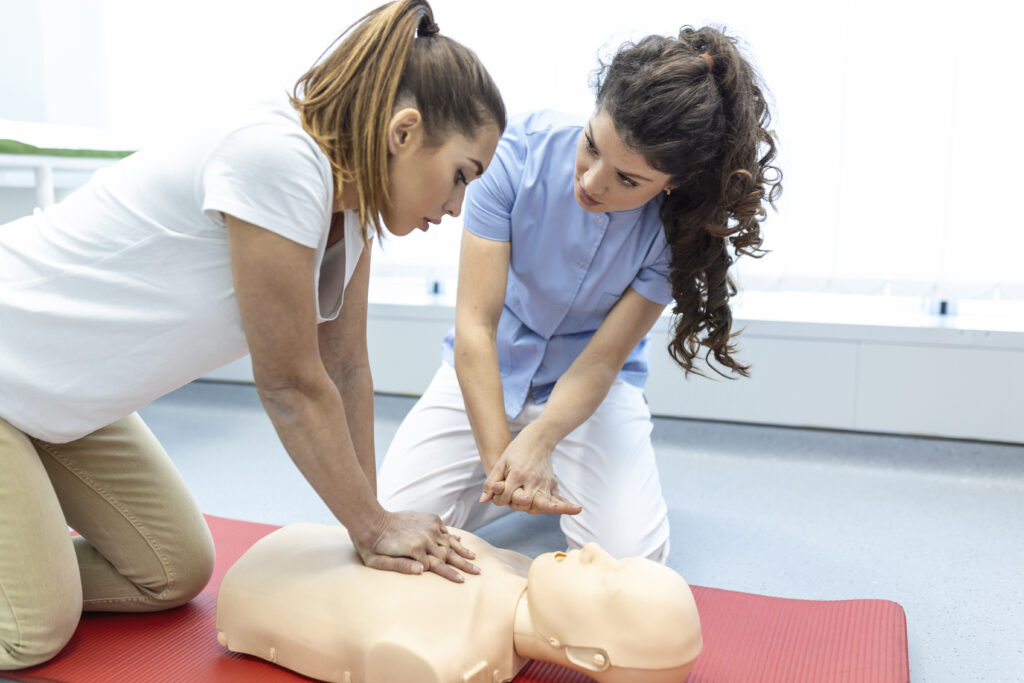
Learn CPR and Save Lives Instead of being a bystander in the event of a sudden cardiac arrest, step forward and help him and definitely save a precious life through this process.
It was in 2014, when the British Islamic Medical Association in the UK first started CPR (Cardiopulmonary Resuscitation) training in mosques and Islamic centers. Later, Islamic Medical Associations in more than 12 countries also started conducting CPR training.
Learn CPR and Save Lives
Now, the last week of September is celebrated as “Life Savers Day” all over the world. Life saving training is called CPR in medical terms. This is a procedure adopted in an emergency, which is tried when a person’s heartbeat suddenly stops or breathing is interrupted.
If done well, this process helps restore blood flow and breathing to patients who have had a heart attack.
Learn CPR and Save Lives
This process is very easy to learn. We know that heart disease is the leading cause of death worldwide. According to the World Health Organization, deaths due to heart attacks, cardiac arrest, and other heart complications have increased alarmingly.
Learn CPR and Save Lives
According to one observation, most (77 out of 100) patients have a heart attack outside the hospital, i.e. at home, on the go, or in some other location. In 93 percent of cases, a family member or friend is present with the patient, but despite this, only 10 percent of patients survive a heart attack or cardiac arrest.
In these situations, the importance of CPR increases greatly. In view of this, it is emphasized all over the world that CPR should be included in the curriculum and its training should be made mandatory for every individual. The importance of CPR is also high because when a patient has a heart attack, only fifty percent of people are able to reach the hospital. If they are given CPR, it is possible that another fifty percent can be saved.
Traditionally, the two methods of CPR include manual chest compressions and mouth-to-mouth resuscitation, but the American Heart Association’s recent guidelines have given compression or chest compressions as the first priority.
Learn CPR and Save Lives
The first stage of CPR is Basic Life Support or BLS. Through this, the patient’s heart is pumped, so that the blood supply to the brain is restored.
It is known that if brain cells do not receive oxygen for three minutes, they start to suffer and death can occur after about ten minutes. CPR is given in the interval between the time a person’s heartbeat or breathing stops and the time medical help is provided. It has seen very positive results in the world.
As doctors, we have also observed that people who have received training in it and have faced cardiac arrest in their family have taken advantage of CPR training and saved the life of their patient.
There are three types of CPR. It is separate for older people, teenagers and infants. Generally, its need is felt more in adults. What is the procedure of CPR?
If you see any person fallen on the ground, then first go near and call or shake him. If he is responding, provide whatever help you can.
Learn CPR and Save Lives , If the patient is not responding, start CPR immediately. There are 5 steps to it.
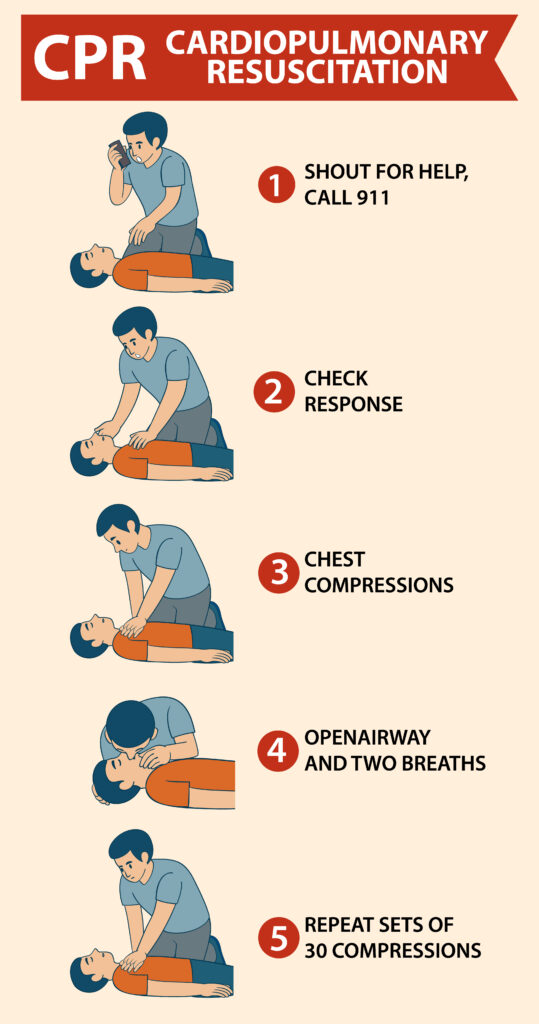
(1) If there is no movement in the body, immediately call for help and call emergency numbers, rescue or any ambulance service.
(2) Lay the patient on his back in a safe and clean place.
(3) Check the patient’s breathing and pulse rate. If breathing and pulse rate are not felt, go to the next step.
(4) Press on the patient’s chest with your hands clasped in a specific way. Press approximately sixty (60) times in one minute. The method is to place one hand in the very center of the patient’s chest and place the other hand on top of it and interlace the fingers of both hands. The guidelines recommend a compression depth of 4 to 5 cm.
(5) After at least 30 compressions, slightly lift the patient’s chin and breathe through the mouth into the mouth.
This process should be done twice in one minute.
This will help restore blood supply to his brain and other vital organs. Continue this process until the patient’s breathing and pulse are restored, the ambulance or paramedics reach the patient, you yourself become extremely tired and cannot do any more, and the patient does not show any signs of life despite two minutes of CPR.
Learn CPR and Save Lives
To perform all the above, it is necessary to first get training. This article provides general information. Avoid trying this process without getting training under the supervision of an expert doctor. The process of CPR can be learned very easily with a few minutes of training. This learning process consists of three stages.
complete explanation of the theory, practical demonstration, and training participants to implement the technique.
This training program is equally important for every individual (be it a man or a woman, an old man or a child of ten or twelve years). By learning this method, any individual can be able to step forward and help someone, instead of being a spectator, God forbid, in the event of any accident or in the event of a sudden heart attack.